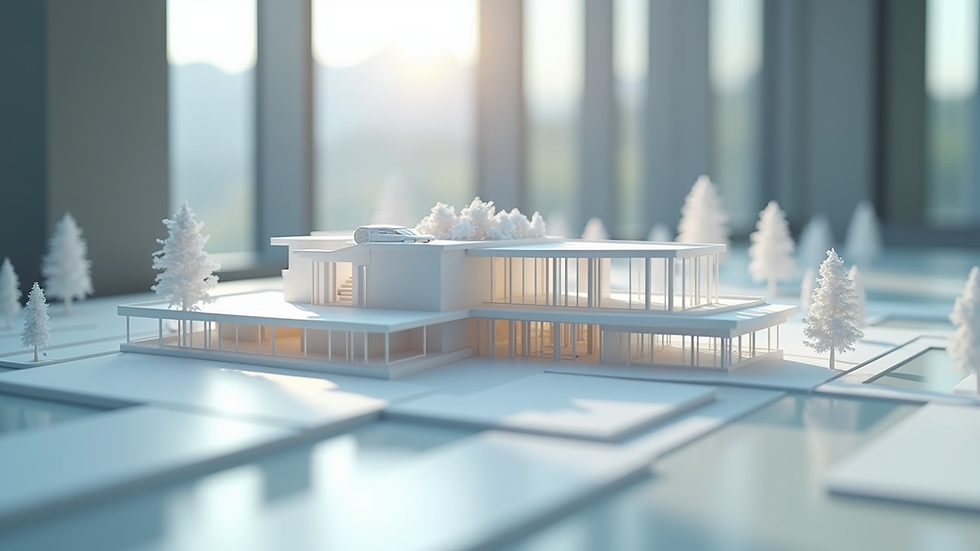
Enhance Your Projects with 3D Rendering: Benefits of 3D Rendering

In the evolving landscape of architecture, engineering, and construction, the integration of advanced visualization techniques has become indispensable. Among these, 3D rendering stands out as a transformative tool that enhances project outcomes by providing detailed, realistic representations of designs before they materialize. This technology not only facilitates better communication among stakeholders but also streamlines decision-making processes, ultimately leading to cost savings and increased efficiency. By leveraging 3D rendering, professionals can visualize complex structures, identify potential issues early, and present compelling project proposals that resonate with clients and collaborators alike.
Understanding the Benefits of 3D Rendering
The benefits of 3D rendering extend far beyond mere aesthetics. This technology offers a comprehensive approach to project visualization that supports every phase of design and construction. One of the primary advantages is the ability to create photorealistic images and animations that accurately depict materials, lighting, and spatial relationships. This level of detail allows for precise evaluation and refinement of designs, reducing the likelihood of costly revisions during construction.
Moreover, 3D rendering enhances collaboration by providing a common visual language for architects, engineers, contractors, and clients. It bridges the gap between technical drawings and real-world expectations, ensuring that all parties have a clear understanding of the project scope and design intent. This clarity fosters informed decision-making and accelerates project timelines.
Another significant benefit is the capacity to simulate various environmental conditions and design alternatives. For example, rendering can illustrate how natural light interacts with a building at different times of the day or how different materials affect the overall aesthetic. This capability supports sustainable design practices and helps optimize building performance.

Practical Applications of 3D Rendering in Project Development
3D rendering serves multiple practical purposes throughout the lifecycle of a project. During the conceptual phase, it enables the rapid visualization of ideas, allowing designers to explore multiple options and present them effectively to clients. This early-stage visualization is crucial for securing approvals and aligning expectations.
In the detailed design phase, 3D rendering supports the creation of accurate construction documents by highlighting spatial relationships and potential conflicts. This reduces errors and omissions that can lead to delays and increased costs. Additionally, it assists in the coordination of mechanical, electrical, and plumbing systems by providing a clear spatial context.
During construction, 3D renderings can be used for progress tracking and quality control. Visual comparisons between the rendered model and the actual build help identify discrepancies and ensure adherence to design specifications. Furthermore, marketing and sales teams benefit from high-quality renderings to showcase projects to potential buyers or investors, enhancing engagement and interest.

Leveraging 3D Architectural Rendering Services for Enhanced Outcomes
To fully capitalize on the advantages of 3D rendering, many firms turn to specialized providers of 3d architectural rendering services. These services offer expert support in creating detailed, accurate, and visually compelling renderings tailored to specific project requirements. By outsourcing this aspect of project development, firms can focus on their core competencies while benefiting from cutting-edge visualization technology.
Professional rendering services employ advanced software and skilled artists who understand the nuances of architectural and engineering design. They ensure that every element, from textures to lighting, is meticulously crafted to reflect the intended outcome. This level of professionalism not only improves the quality of presentations but also enhances the credibility of project proposals.
Moreover, partnering with a dedicated rendering service can lead to significant cost savings. By reducing the need for physical models and minimizing design errors, firms can allocate resources more efficiently. The scalability of these services also allows for flexibility in project scope and timelines, accommodating changes without compromising quality.
Enhancing Communication and Stakeholder Engagement
Effective communication is critical in complex projects involving multiple stakeholders. 3D rendering plays a pivotal role in bridging communication gaps by providing clear, understandable visuals that transcend technical jargon. This accessibility ensures that all participants, regardless of their technical background, can engage meaningfully with the project.
Visualizations created through 3D rendering facilitate stakeholder buy-in by illustrating the tangible benefits and aesthetics of a design. Clients can better appreciate the spatial dynamics and material choices, leading to more confident decision-making. Similarly, contractors and fabricators gain a clearer understanding of construction requirements, which improves coordination and reduces misunderstandings.
Interactive 3D models and walkthroughs further enhance engagement by allowing stakeholders to explore the project virtually. This immersive experience fosters a deeper connection to the design and encourages collaborative feedback, which can be integrated into subsequent revisions.
Future Trends and Innovations in 3D Rendering
The field of 3D rendering continues to evolve rapidly, driven by advancements in computing power, software capabilities, and integration with other technologies. Emerging trends such as real-time rendering, virtual reality (VR), and augmented reality (AR) are expanding the possibilities for project visualization.
Real-time rendering enables instantaneous updates to models, allowing designers and clients to experiment with changes dynamically. This interactivity accelerates the design process and enhances creativity. VR and AR technologies provide immersive experiences that place users within the virtual environment, offering unprecedented perspectives on spatial relationships and design impact.
Artificial intelligence and machine learning are also beginning to influence rendering workflows by automating repetitive tasks and optimizing rendering quality. These innovations promise to make 3D rendering more accessible and efficient, further embedding it as a standard practice in project development.
Maximizing Project Efficiency with 3D Rendering
Incorporating 3D rendering into project workflows is a strategic decision that yields measurable improvements in efficiency and cost management. By visualizing projects in detail before construction begins, firms can identify potential issues early, reducing the risk of costly rework. This proactive approach supports tighter project schedules and better resource allocation.
Additionally, 3D rendering enhances the accuracy of quantity takeoffs and material specifications, contributing to more precise budgeting and procurement. The ability to simulate construction sequences and logistics also aids in planning and risk mitigation.
Ultimately, the integration of 3D rendering aligns with the goal of optimizing productivity and minimizing waste. It empowers firms to deliver higher-quality projects on time and within budget, reinforcing their competitive advantage in the industry.

By embracing 3D rendering technologies and collaborating with expert service providers, firms can transform their project development processes. This transformation not only enhances visual communication and stakeholder engagement but also drives significant improvements in efficiency, cost control, and overall project success.